Interview Synthesis and Insights
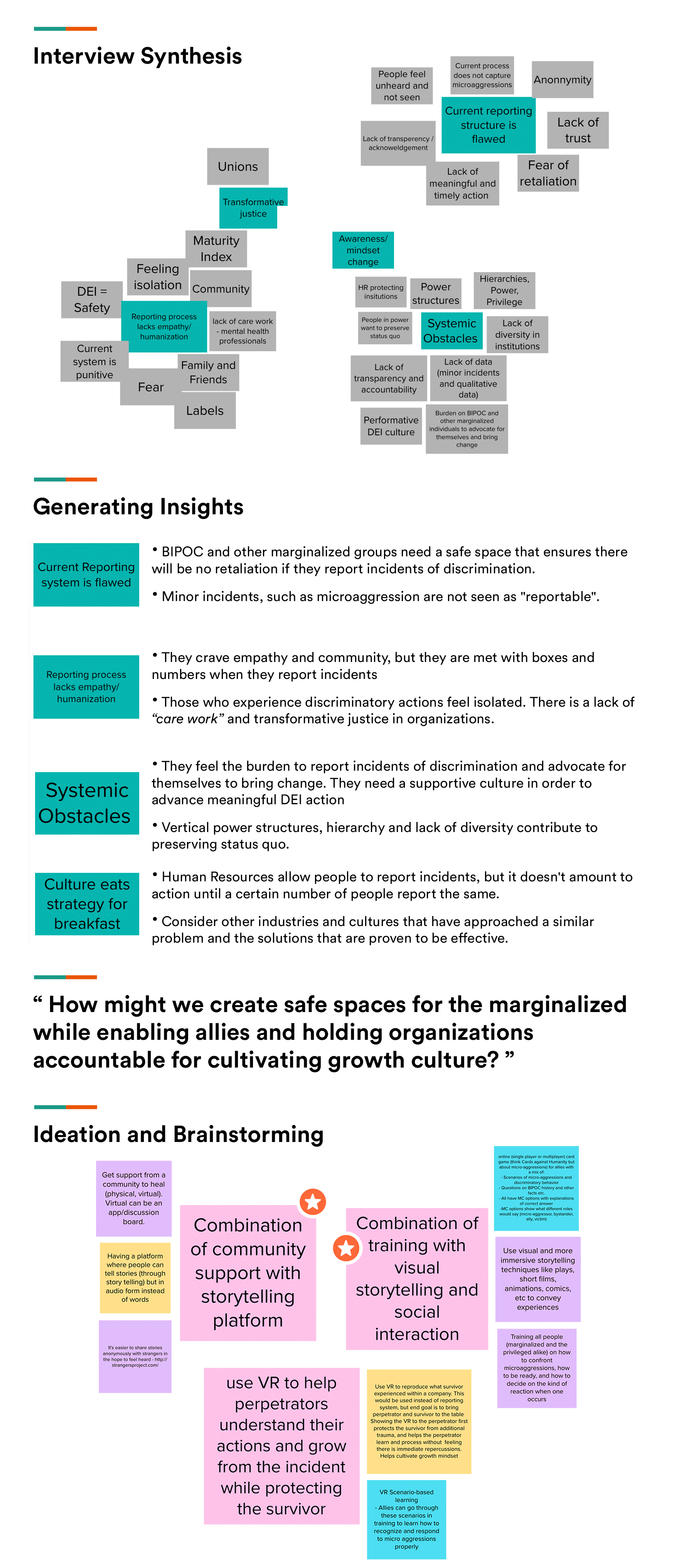
We synthesized the interview notes and found 4 key themes.
1. Current reporting system is flawed/incomplete
2. Reporting process lacks empathy
3. Inaction to incidents due to systemic obstacles
4. Gaps within the organizational culture
We generated insights from the themes to clearly define our problem statement in the form of "How Might We".
Objective
“ How might we create safe spaces for BIPOC and other marginalized groups while enabling allies and holding organizations accountable for cultivating growth culture? ”
Ideation and Brainstorming
We rephrased our "How might we..." into "What might be all the ways to..." for our ideation and brainstorming. We came up with 3 main ideas voted on 2 to focus on given the time constraints.
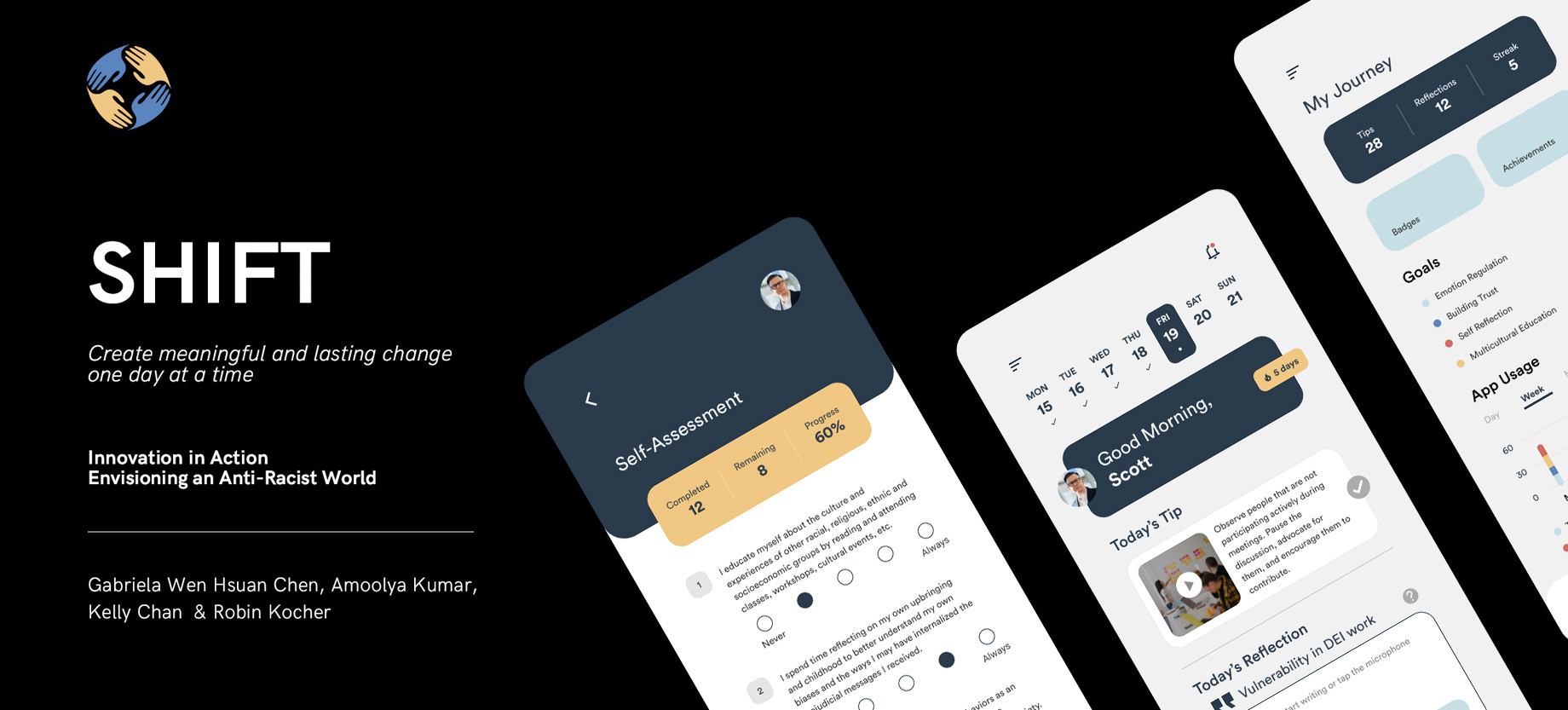
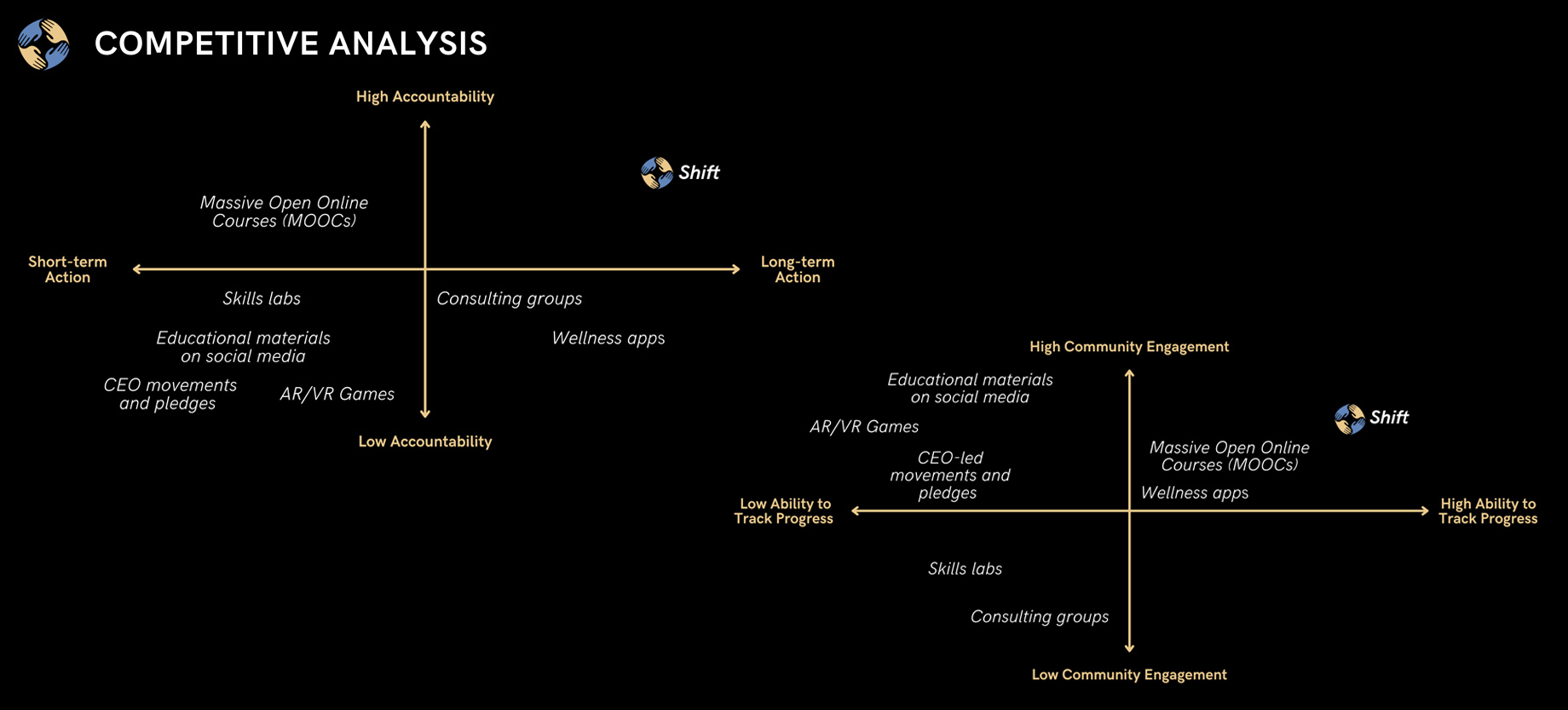
Anti-racist work is is incremental, long-term, relational, restorative and transformative. It is care work and can integrate easily with wellness programs offered by companies to their employees. Hence, we decided to design an employee-centric mobile platform that supports individuals to shift from a mentality of short-term, performative action to a mindset of growth and continuous engagement in anti-racist action.
Personas
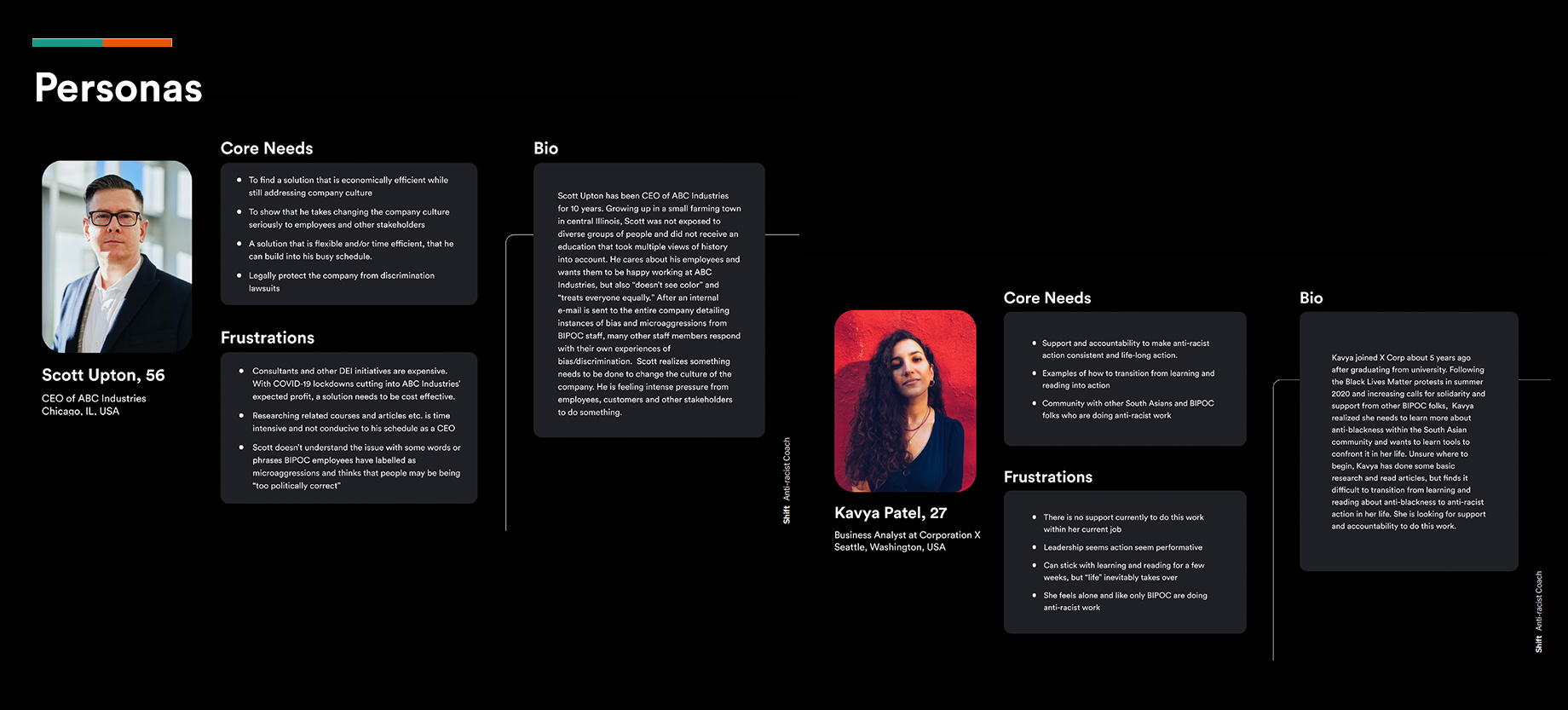
We developed two personas - one to represents our customers and the other to represent our primary and secondary users.
Our customer persona is Scott Upton, CEO, identifies as a white male. He was recently informed of instances of bias, microagressions, and discrimination in his company. He is feeling intense pressure from employees, customers, and other stakeholders to take action. He lacks exposure to diverse groups and is unsure how to address the issues. He is looking for a solution that is time and cost efficient and allows him to prove his dedication and authenticity.
Our user persona Kavya Patel is a business analyst. Having followed the Black Lives Matter protests in 2020, realized that she wants to educate herself about anti-blackness within the South Asian culture and learn tools to confront it in her life. While she has done some basic research and read books and articles, is struggling to transition from learning to real-life execution. She is seeking support and accountability so she can take consistent action.
Exploring the Problem Space
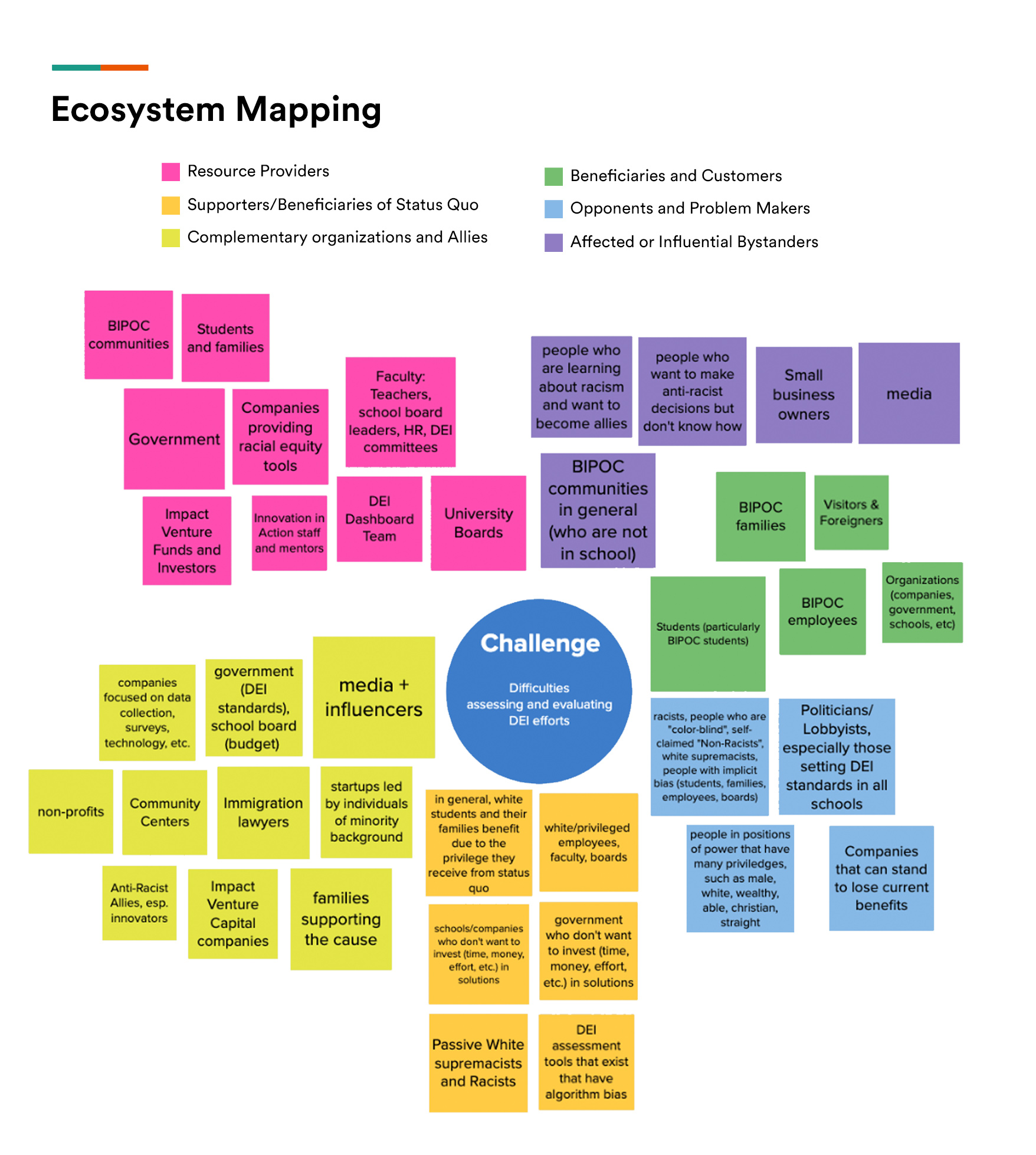
We started by examining the current ecosystem and status of Diversity, Equity and Inclusion (DEI) efforts within universities and other institutions. We used the holistic approach of Ecosystem Mapping to lay out all the stakeholders and entities that would be involved.
Research
We designed a survey study to learn the DEI efforts within their organizations and to recruit interviewees for our ongoing research. We reached out to student organizations, professionals and on social media to gather responses. We learned from the survey that BIPOC (Black, Indigenous, People of Color) and other marginalized groups faced exclusion, lack of safe space, lack of organizational accountability and gaps in the incident reporting system.
We received 188 responses for the initial survey of which 91 were BIPOC. We devised interview plans for various stakeholders based on survey findings and conducted 15 interviews - 7 university staff, 3 business professionals, 3 students, and 2 DEI professionals.
From our research we learned that there was a lack of transparency, empathy, accountability and meaningful action were the main issues.