
Purposeful & Resourceful

Complementary products that meet the overall wellbeing needs of end-users
Objective
PurposefulTo enable users attain emotional wellness, build healthy habits, follow-through on goals, and live with more purpose each day.

Resourceful
To identify users' essential needs and recommend relevant local and employer-sponsored resources and support.
My Contributions
Research · UX and Product Design · Roadmapping
I collaborated with Clients, Research, Data Analytics, Sales and Marketing, Visual Design and Product Management teams to conduct research studies that helped identify critical user needs for both products and produce final designs.

I created designs starting from concepts and low-fidelity wireframes to interactive click-through prototypes and tested them across all stages. I helped complete the product design cycle by conducting usability tests and evaluating the app with the newly implemented designs.
Purposeful daily check-in
I took my work through the the divergent-convergent, double-diamond design thinking process with four phases - discover, define, develop and deliver

1 Discover
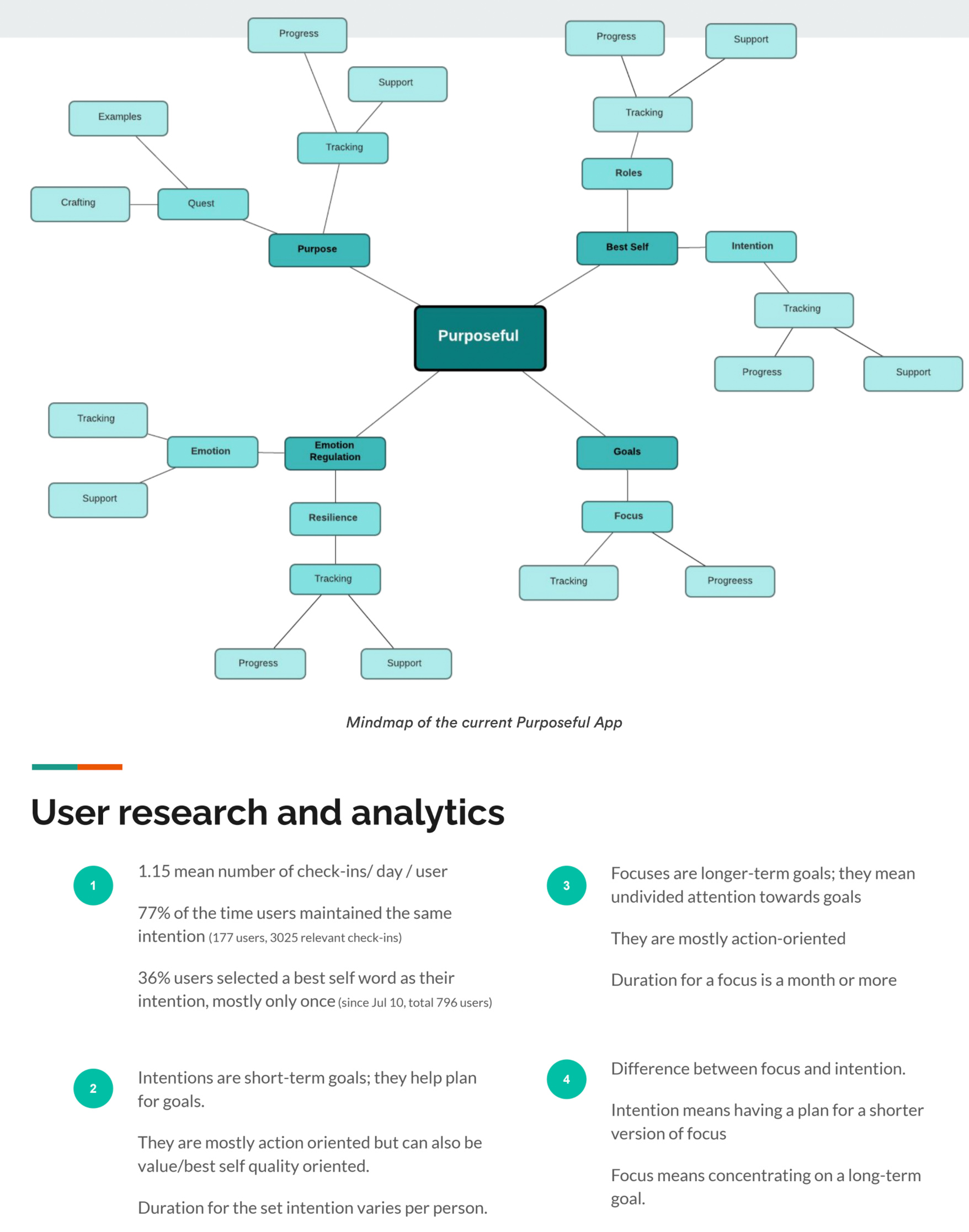
I started by analyzing the current state of the app, sifting through user feedback and conducting primary research(interviews, benchmarking, and surveys) to learn the expectations of users from an emotional wellness apps.

I learned that users want to feel heard, get sound advice from a coach/expert, select from recommended actions for handling emotions and following through on their goals, and measure progress over time.

From conversations with subject matter experts and literature reviews, I learned that naming emotions helps reframe and regulate emotions better. Any small progress celebrated will increase intrinsic motivation that can be leveraged to help users continue to build and sustain habits.

These helped in defining the problem better.

2 Define
How might we make emotional wellness approachable to all users?

How might we enable users achieve emotional wellness, build healthy habits and live with more purpose each day?
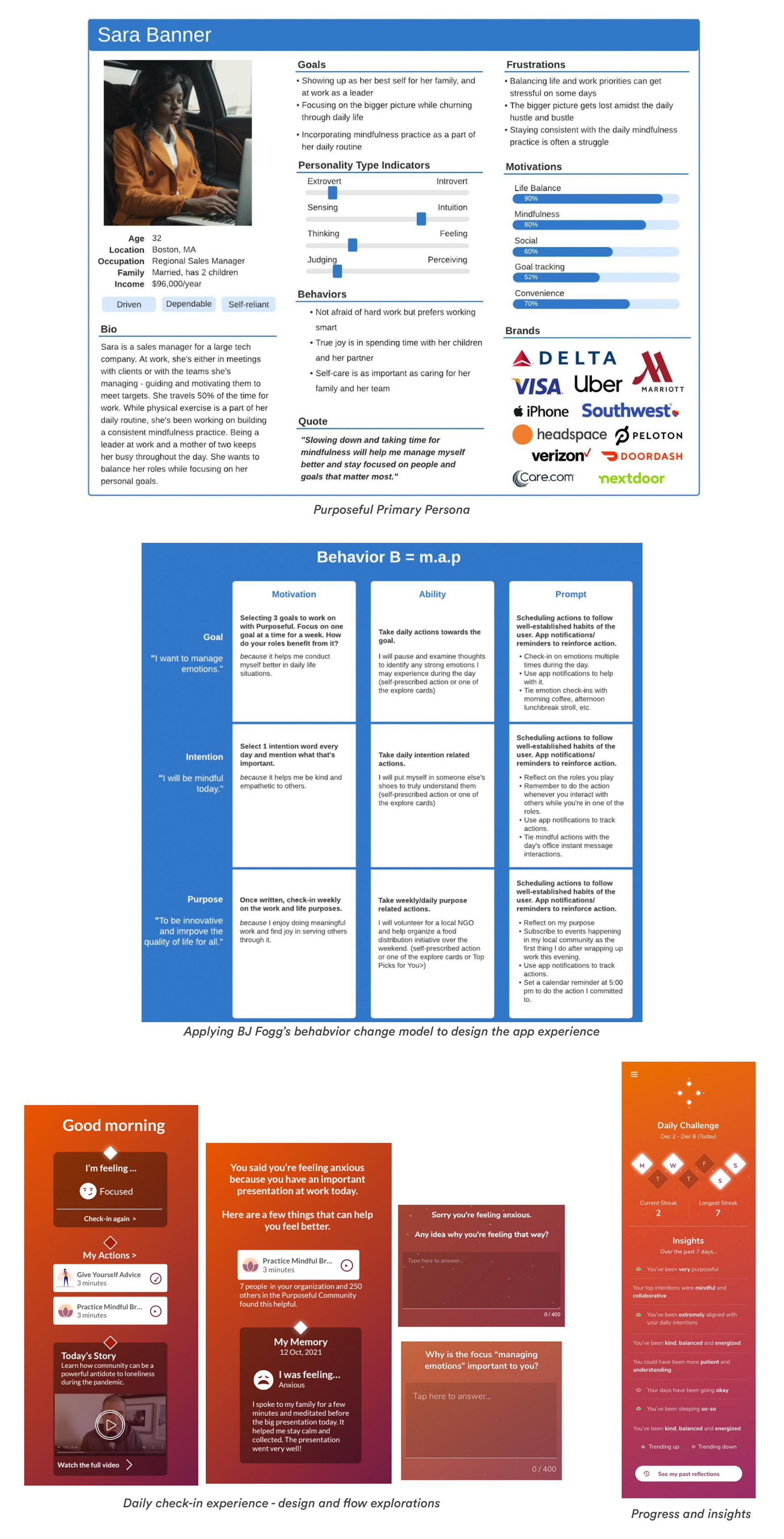
Design Research for PurposefulPurposeful persona - BJ Fogg model - Designs

3 Develop
After defining the problem statement and user needs clearly, I collaborated with various stakeholders for ideation. The design ideas were guided B J Fogg and James Clear behavior change models.

Fogg's "B = MAP" says behavior change B is possible when Motivation, Ability, and timely Prompts come together. For example, "To be more physically active, I will do 5 pushups each time I get up from my desk"

James Clear's work focuses on helping people build long-term habits by encouraging them to associate behaviors with their identity. For example, "I am the type of person who works out regularly" is more effective than saying "I want to lose 10 pounds in 4 weeks."

4 Deliver
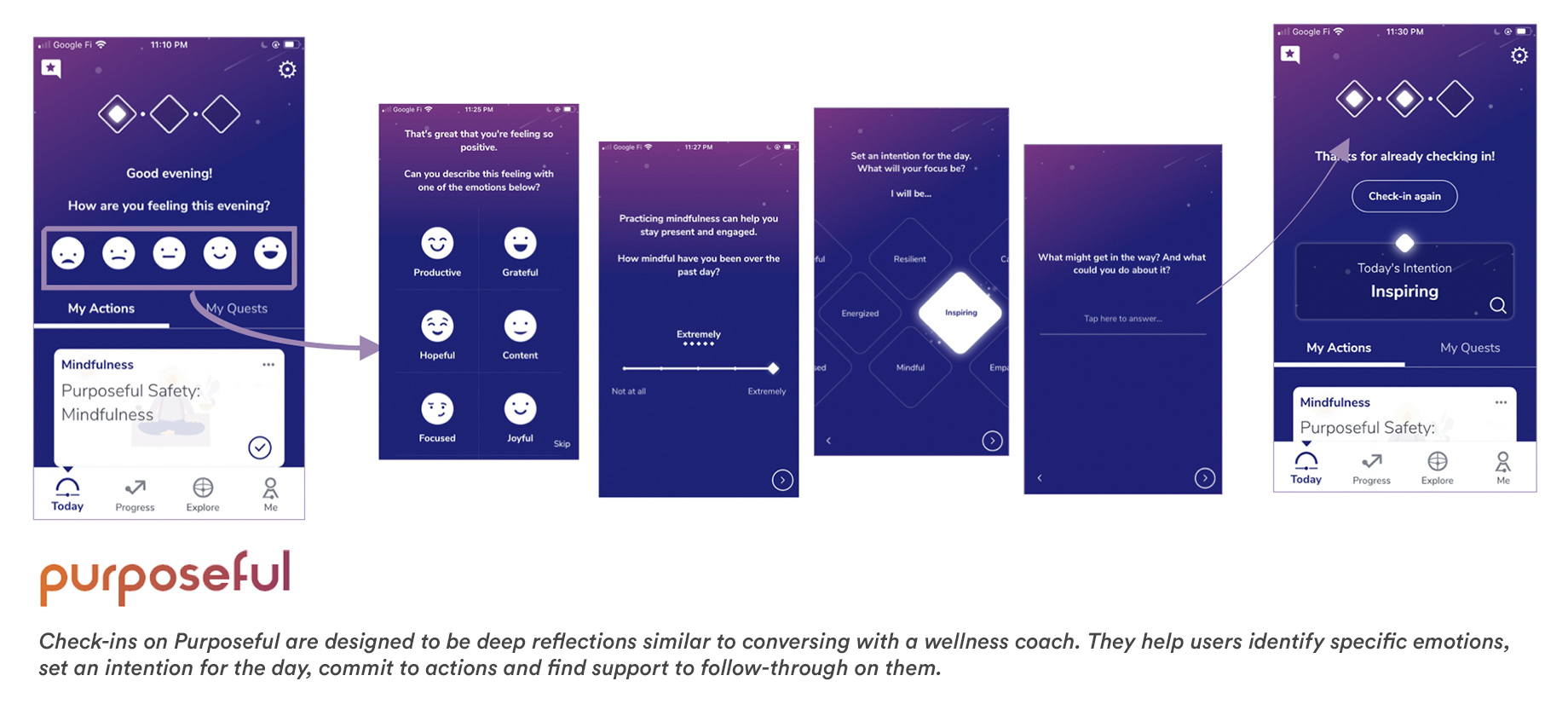
The check-in asks users to select an emotion they're feeling from the list containing emoji-emotion pairs.

The app acknowledges their feelings and asks to reflect on why they're feeling that way.

Users are asked to set an intention for the day from a list of qualities. They reflect on why that's important to them and how people around can benefit from it.

The app provides action recommendations for handling emotions better and living in alignment with the picked intention. For example, if the user is feeling anxious and intends to be more productive on a given day, the app suggests actions that help to stay calm and focused on tackling tasks.

From the recommendations, users can select actions that match their potential and commit to doing them at a time that follows well-established habits (for example, schedule 5-minute walking breaks on the calendar after every meeting).

They can set reminders on the app as timely prompts to follow-through on planned actions.

Across all four design thinking phases, I tested and refined the conceptual designs and prototypes through usability testing with users and stakeholders.


My Reflections
The same check-in experience every day can get stale too soon. Introducing variability, making them contextual, quick and easy, and providing insights into the user's journey so far can motivate them to keep coming back into the app. Longitudinal user testing would be the best way to evaluate such an experience.
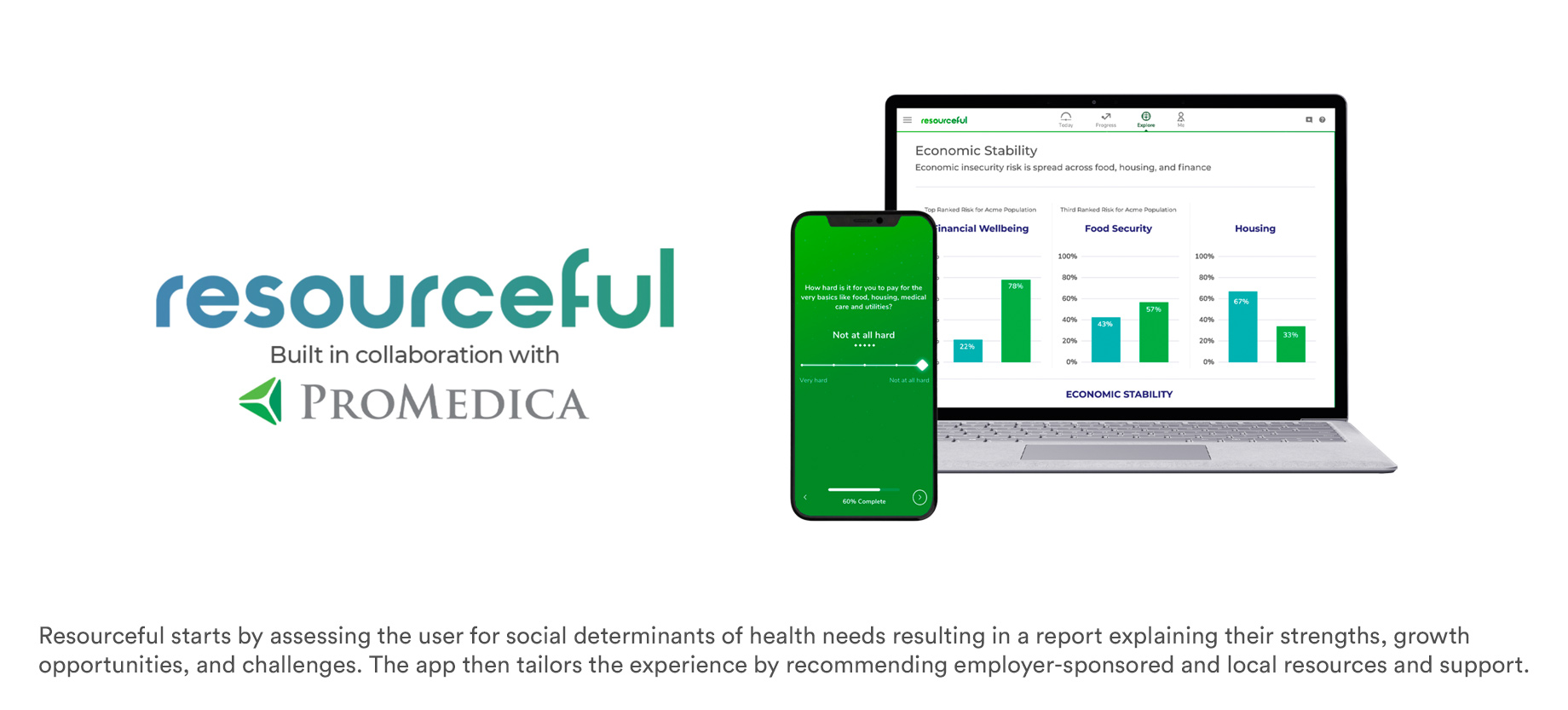
Resourceful assessment and report
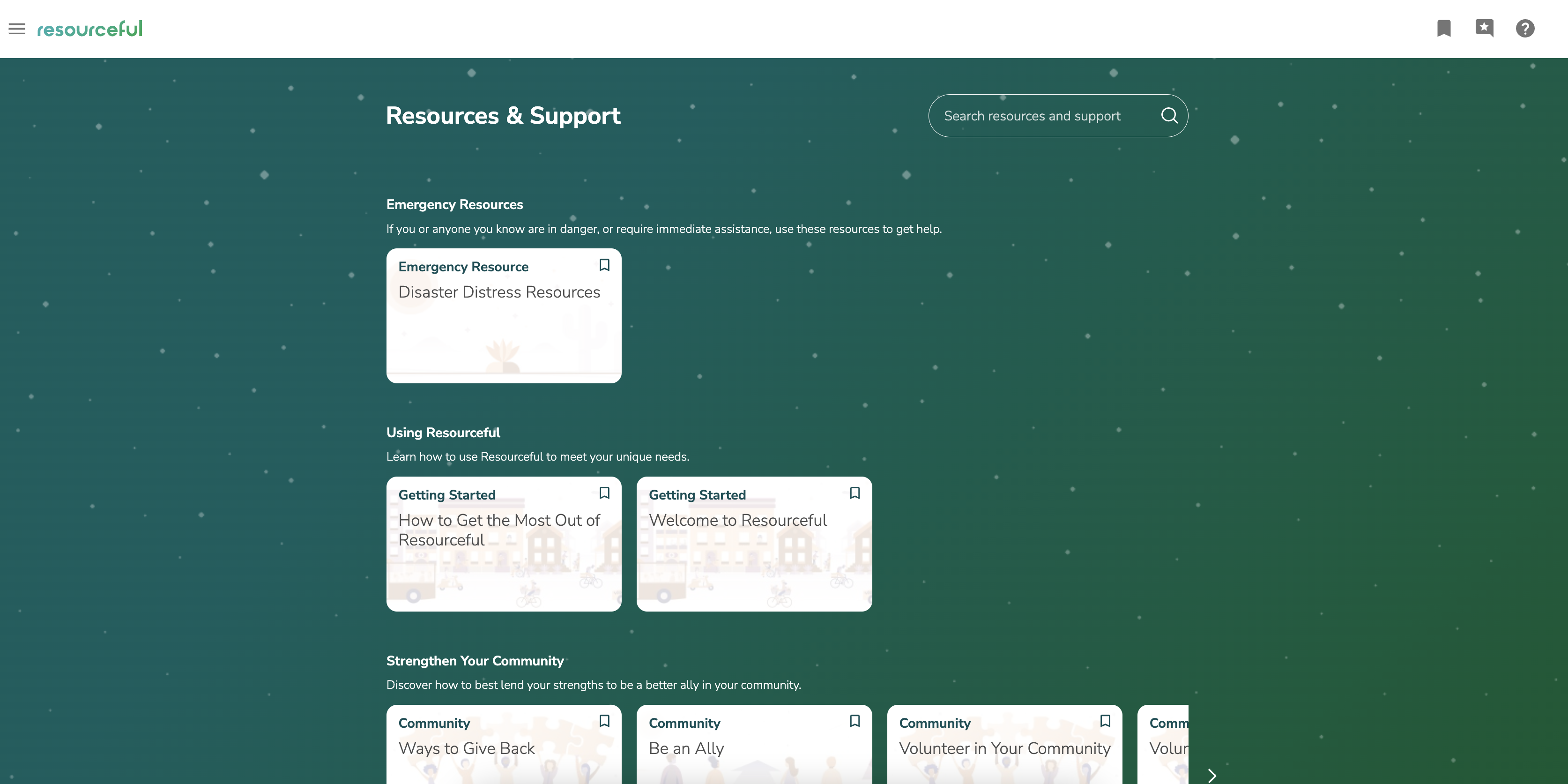
Resourceful home screen
Discover
Collaborating with clients, end-users, and other stakeholders helped produce more relevant designs for users' social determinants of health needs. Through interviews and surveys I learned that people with essential needs find it difficult to discuss the issues. They prefer accessing local and employer-sponsored resources privately. They expect the report following the assessment to be empathizing and action-oriented, pointing them to relevant resources.

Define
How might we identify users' essential needs and recommend relevant resources and support?

Develop
Testing concept designs and user interviews revealed that users need to know the benefits for taking the assessment. They want the questions need to be optional. The report needs to acknowledge users' efforts and empathize with their needs. Promising privacy for user's data is important. Users need to quick and easy ways to access resources.

Deliver

Since employees receive the Resourceful app from their employer and find it hard to trust and provide honest answers, a privacy pledge informing users that their responses will not be shared in an identifiable way is included before users start the assessment.
Traditional Health assessment have too many questions. Since this isn't one of those, we show a progress bar with percentage complete while users are completing the assessment.
A "Skip" button to gives users the freedom of choice to answer questions they feel comfortable answering
Since the assessment asks questions around users' personal lives, the report is designed to categorize essential needs into three parts - strengths and growth opportunities (within the direct control of users such as resilience and purpose) and challenges (externally controlled factors such as food and housing access).
Categories of user's needs are designed to be accessed easily with "Emergency Resources" placed at the top of the Home page.

I tested the designs throughout the design process and recommended incremental changes to improve user engagement, retention, and usability. I collaborated with stakeholders to plan the roadmap for the product with changes that can be implemented with lesser effort and higher returns in the near term and those that need more planning and effort in the long term.

Reflections
Thinking about Abraham Maslow's Hierarchy of Needs pyramid, Resourceful and Purposeful combined addresses the needs from all the tiers, however, motivation and purpose differs from person to person irrespective of the tier(s) their needs belong to. Rooted in research, I continue to have mixed feelings when it comes to users trusting an app sponsored by their employer to assess and address the employee needs in an unidentifiable way.